



More about Buchu
Essential oil, traditional use and Fynbos origin make buchu a plant world of its own.
More about Buchu
Buchu is a South African Fynbos plant. Its most striking feature: when you rub the leaves between your fingers, the essential oil from the small oil glands on the undersides of the leaves remains on the skin — and with it a scent that recalls peppermint, blackcurrant and green, tart-fruity notes.
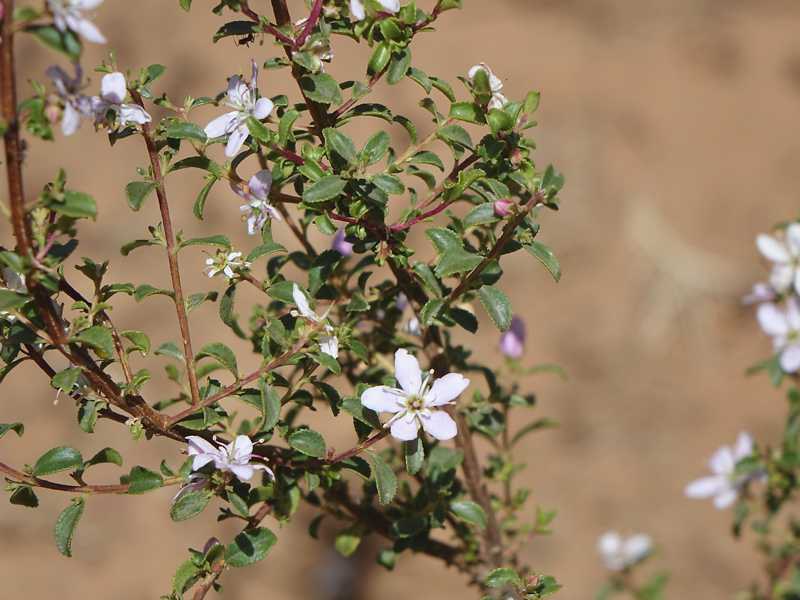
The small oil glands on the undersides of the leaves make buchu unmistakable as soon as the leaves are rubbed: the essential oil shapes the plant’s scent from the very beginning.
It is precisely this world of scent and oil that makes buchu special. Rooibos and honeybush are first perceived as teas; with buchu, the essential oil belongs to the plant from the start.
What makes buchu interesting
When looking for medicinal plants connected with the bladder, urinary tract or similar concerns, buchu also comes up. In South Africa, buchu was traditionally used, among other things, in relation to urinary tract, stomach and cold-related complaints. There were also external uses, for example on cuts and burns, or mixed with animal fat for the skin.
A look towards Great Britain also shows that people had encountered buchu much earlier in connection with similar complaints. As early as the 19th century, the plant was listed there as a medicinal plant. In 1821, buchu was included in the British pharmacopoeia. This is not modern medical proof of efficacy. But it does show that buchu was already being used as a medicinal plant for similar complaints more than 200 years ago.
How buchu is used today
The buchu leaf is used whole or cut for infusions. The essential oil is also distilled from fresh leaves and stems. That is why buchu is encountered today not only as a tea, but also as an oil, in capsules, in tinctures and in fragrance or body care products.
Where buchu grows
Buchu belongs to the Fynbos world of the South African Cape. The plant was collected wild for a long time; today there are also cultivated stands, including in regions such as the Cederberg, Piketberg, Paarl and Wellington.
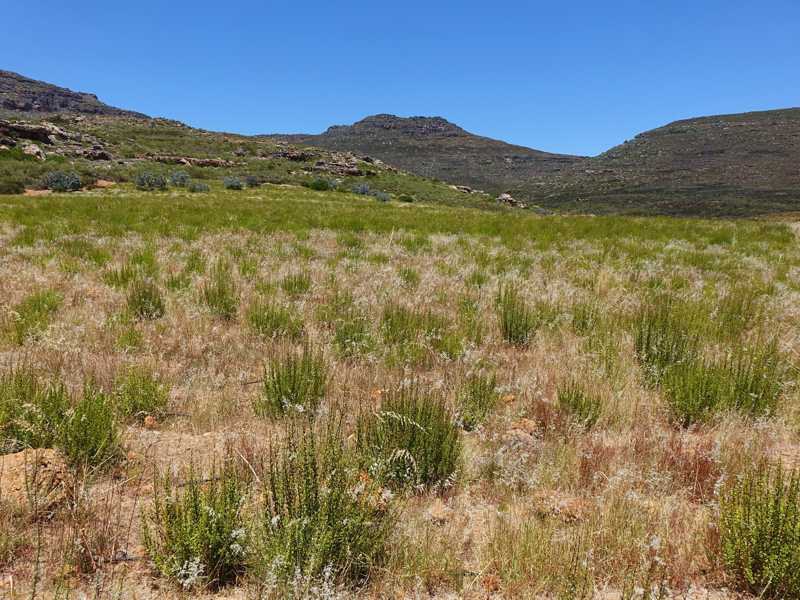
Buchu grows in the Fynbos of the South African Cape. Wild harvesting and cultivated stands both belong to the story of this plant.
Which buchu is usually meant
For tea and infusions, round-leaf buchu, Agathosma betulina, is usually the main species meant in everyday use. Agathosma crenulata is also part of the buchu world. This species becomes especially important where the oil and its industrial applications are concerned.
Where to go from here
Those who would like to discover buchu further from here can go deeper into the plant world, look more closely at origin and farm context, or get to know buchu through the products in the shop.