



More about Honeybush
Honeybush does not begin with modern brewing instructions.
More about Honeybush
When people buy tea today, they usually expect a short note on steeping time. With Honeybush, this is only a limited starting point. Older South African descriptions suggest a different image: a kettle on the stove, a tea kept warm, accompanying everyday life.
That is exactly what makes Honeybush so interesting as a starting point. It is easier to understand when it is not seen first as a finished market product, but as part of a South African plant world and everyday culture.
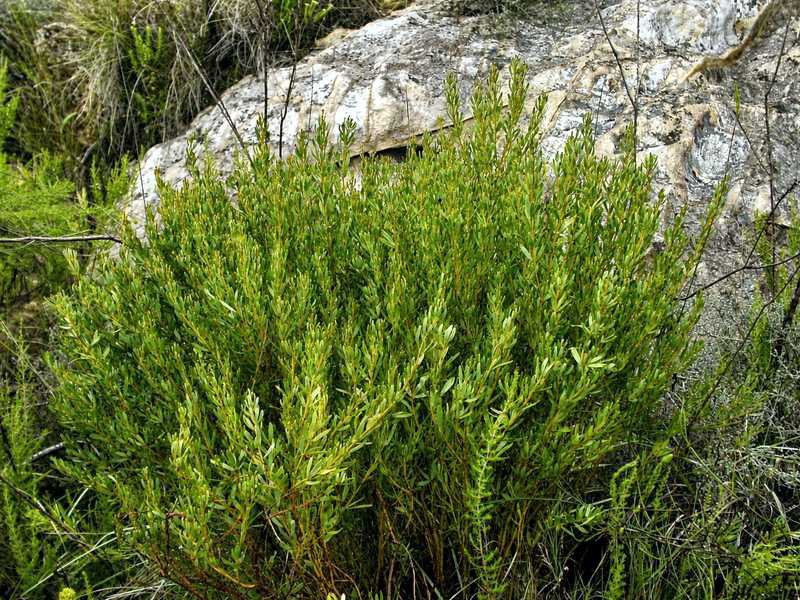
Here, Honeybush appears not as a finished tea, but as a plant in its own right within its South African landscape of origin.
What Honeybush actually is
Honeybush is a South African Fynbos plant in its own right. It is not simply Rooibos with honey, nor a secondary variety of Rooibos, but part of its own plant and tea world.
Its landscape, too, belongs to a different world. While Rooibos is quickly associated with the Cederberg, the world of Honeybush lies further south and east. That alone helps to place it more clearly.
How Honeybush comes across
The easiest way to approach Honeybush is through its taste. The tea usually feels soft, rounded and naturally slightly sweet. This is exactly why many people find it approachable, even when they drink it for the first time.
The name Honeybush is linked to the honey-like scent of its yellow flowers. In the cup, the tea often shows warm golden to ruby-red tones and, depending on origin and processing, can appear somewhat fruitier, more floral or spicier.
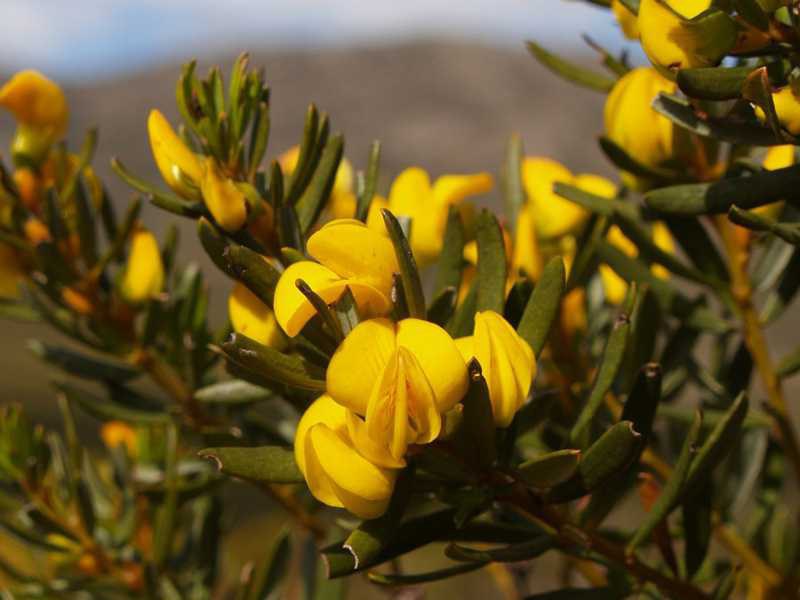
The yellow flowers of Honeybush release a sweet, honey-like scent. The name is derived from this impression.
Where Honeybush comes from
For a long time, Honeybush remained more closely tied to specific regions than Rooibos. To this day, it is more strongly connected with natural stands, mountain slopes and Fynbos landscapes than many people initially assume.
This difference also shows in its pace. Honeybush is not simply harvested in short cycles like an ordinary cultivated product. The plants need time to sprout again, flower and build up strength. This slower rhythm is part of Honeybush.
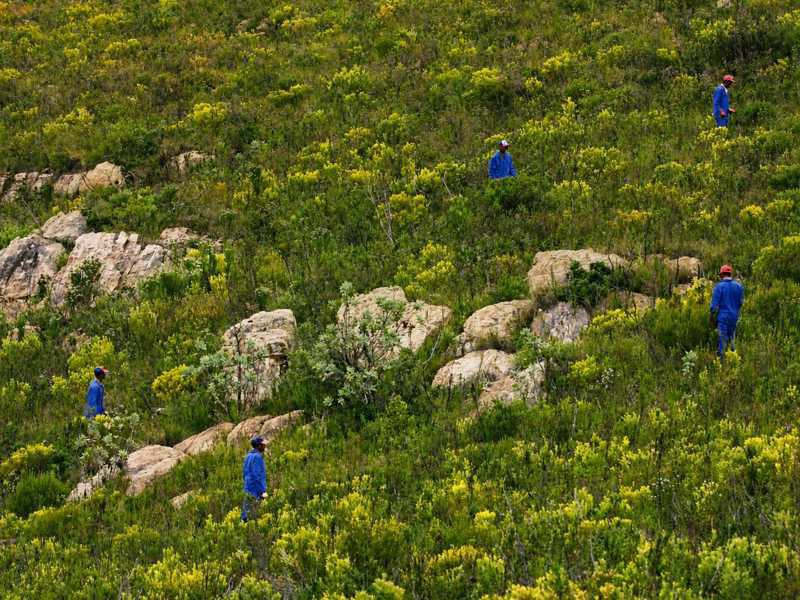
Honeybush often grows in places where landscape, plant and harvest remain closely connected.
Where to go from here
Those who would like to discover Honeybush further from here can go deeper into its history, look more closely at origin and plant world, or get to know Honeybush in a very practical way through the products in the shop.
In this way, Honeybush is no longer just an unfamiliar name. It becomes visible as a South African plant world of its own: mild in impression, independent in origin and different in pace from what many people first expect.