



Barista Guide: Rooibos & Honeybush Espresso
In South Africa, rooibos doesn’t just go in a teacup – it also ends up in the portafilter, in cappuccino, and served over ice in a glass. What sounds new to many people here is everyday life there: Rooibos Espresso (often called “Red Espresso”) – a barista-style drink without caffeine, but with the same ritual as espresso.
That’s exactly what makes rooibos and honeybush espresso so exciting: you get an aromatic base for latte, cappuccino, or iced drinks, without the “jitters” – and without having to skip your coffee ritual in the evening. And: some of our customers already serve these Red Drinks in their cafés, because guests specifically ask for caffeine-free alternatives.
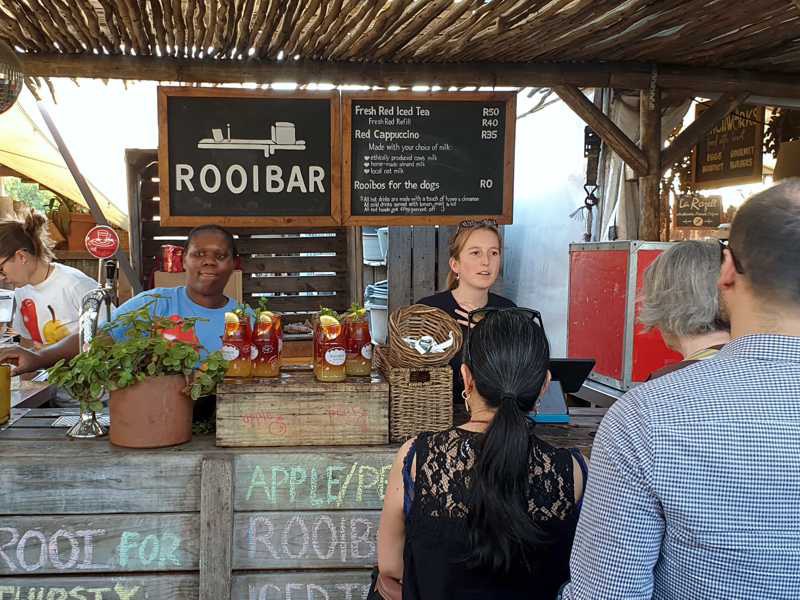
Cape Town lifestyle: Red Drinks in everyday life
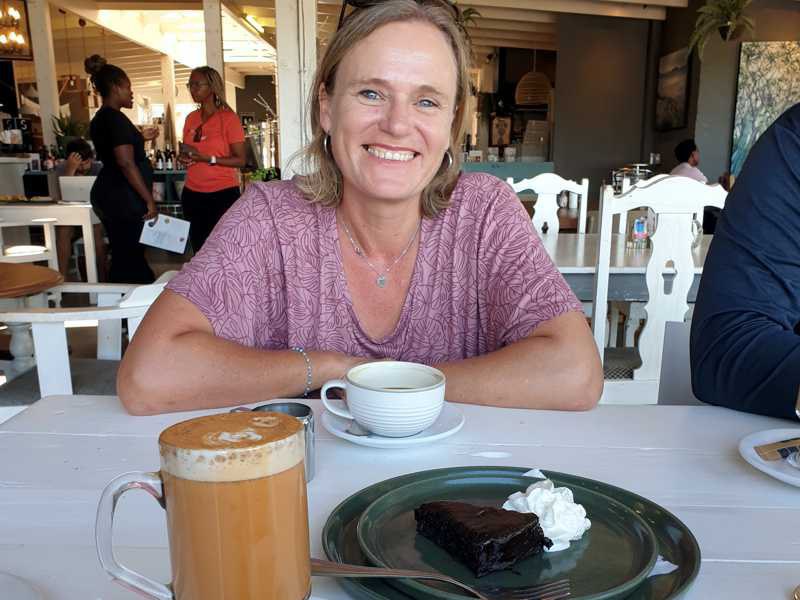
This photo from Oranjezicht City Farmers Market in Cape Town captures the vibe perfectly: iced rooibos is simply part of the day – refreshing, effortless, and still like a real café drink.
What you’ll find on this page
- a simple guide to Rooibos Espresso (portafilter, pods, capsules)
- tips to prevent a watery extraction
- ideas for cappuccino, latte, and iced rooibos with lemon & mint
Why pods & capsules – and why loose as well?
For years, Gerhard Rossouw supplied coffee shops in the Cape Town region (including Paarl, Stellenbosch, and Franschhoek) with coffee. As guests increasingly asked for caffeine-free barista drinks, some cafés started experimenting with rooibos – but the results were disappointing: the “Rooibos Espresso” tasted like brewed tea, and handling it in a portafilter was cumbersome.
Finely cut rooibos couldn’t be tamped like coffee grounds and was difficult to knock out. Residue clogged the basket and required time-consuming cleaning after each use. That’s how the idea of Rooibos Espresso pods was born – a solution for coffee shops and portafilters: clean, fast, consistent extraction – and genuinely convincing in taste.
Important context: The capsules came later, because private customers also wanted to make rooibos espresso, but at home they often only had a capsule machine. It’s practical and aromatic – but in flavour it often feels more tea-like than pods used in a portafilter.
Gerhard tested rooibos from many different farms until he found the right one. Aroma and sweetness depend heavily on the farm of origin and how the rooibos is cut there. Very few people know that part of rooibos’ natural sweetness comes from the rooibos stems – and that’s exactly what can make a good rooibos espresso taste especially round.
Just like coffee espresso, the balance of water pressure, compaction, and the right basket determines flow rate – and therefore extraction. Based on his designs, Gerhard had a machine built that compresses the rooibos and packs it into pods.
Which option is right for you?
- Pods (portafilter): the most intense, clean & consistent – ideal for true “Red Espresso” moments.
- Loose: maximum control over dose & flow – like a classic espresso setup.
- Capsules: maximum convenience – often milder/more tea-like, but perfect for quick milk- and iced drinks.
Explore in the shop: Barista & Espresso – all options
Brewing with pods (portafilter)
Place the rooibos pod into the filter basket in the portafilter and lock the portafilter into the machine. Fit note: the pods are designed for 58 mm portafilters (often used in professional machines). For smaller portafilters commonly found in home machines (e.g. approx. 51–52 mm), it’s best to use the double basket and gently press the pod until it sits flush.
Press the button for a single shot. When the first shot finishes, wait about 5 seconds and start the second single shot. After the first shot, the rooibos gets wet and expands – during the second shot you’ll get a slower flow, better extraction, and a rounder taste.
What Rooibos Espresso tastes like
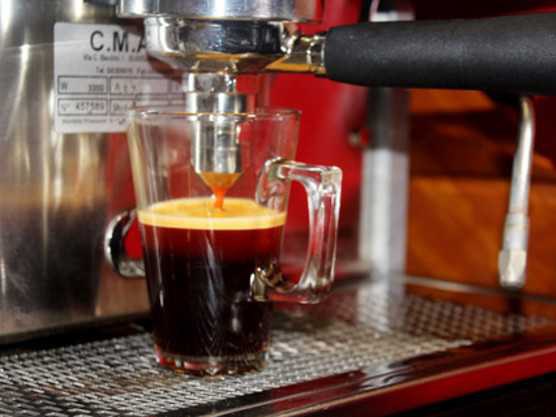
Rooibos Espresso is the stronger, more “classic” base: warm, malty, and full-bodied. In a portafilter, the short pull feels like espresso in the ritual – but the flavour is clearly rooibos: warm and roasty, lightly sweet, with noticeable body.
- Aroma: warm, malty, roasty-spicy
- Mouthfeel: full, round, “espresso-like” in concentration
- Pairs especially well with: cappuccino, latte, macchiato – or on its own as a short shot
Tip: If you drink rooibos espresso with milk and it tastes too mild, use two short shots instead of one long pull. That keeps the flavour concentrated.
What Honeybush Espresso tastes like
Honeybush is rooibos’ gentle, fragrant sister: naturally sweet, honey-like, and floral. As an espresso base it feels soft and round – perfect if you like your red latte or red cappuccino especially smooth.
- Aroma: honey-sweet, floral (often with a lightly caramel-like impression)
- Mouthfeel: soft, round, not very “dry”
- Pairs especially well with: milk drinks and iced drinks
Honeybush & Rooibos: the all-rounder
Rooibos adds more body, honeybush brings sweetness and fragrance. The result is a balanced base that works well on its own – and especially harmoniously with milk.
- More body: from rooibos
- More sweetness & fragrance: from honeybush (honey-like, floral)
- Ideal if you: want something “between bold and mild”
Red Drinks (like in a café)
Iced Rooibos Espresso (lemon & mint)
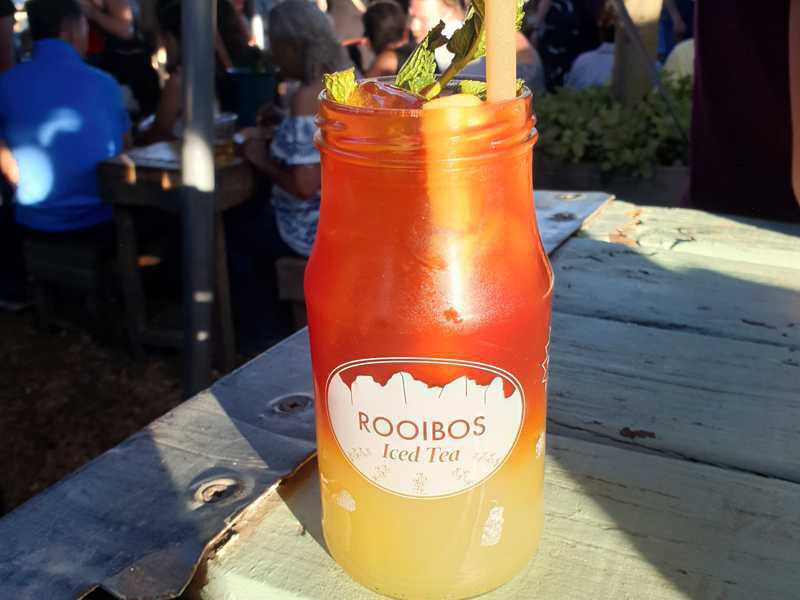
A typical market drink from Cape Town: lemon at the bottom, rooibos on top – over ice, with mint.
- Fill the glass halfway with lemon juice.
- Add ice cubes.
- Slowly pour rooibos espresso over the top so the layers stay visible.
- Garnish with fresh mint.
Red Cappuccino (180 ml)
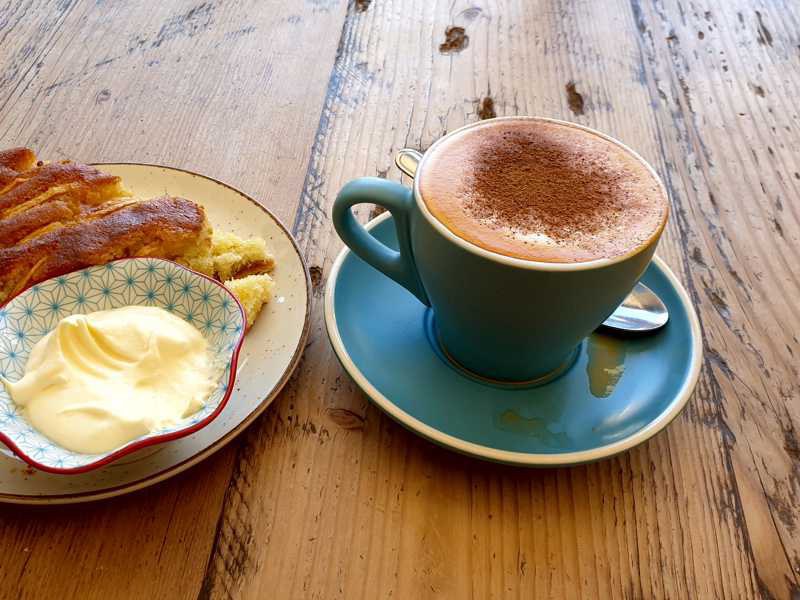
- Pre-warm the cappuccino cup with hot water.
- Let 25–30 ml rooibos espresso run into the warmed cup.
- Froth 100–150 ml milk (up to max. 65 °C).
- Pour in the milk foam, stir briefly, enjoy.
Red Latte (240 ml)
- Pre-warm the latte glass.
- Let approx. 30 ml rooibos espresso run into the warmed glass.
- Froth approx. 210 ml milk (up to max. 65 °C).
- Pour milk into the glass (pitcher close to the glass, gently move side to side).
- Enjoy.
Difference: more milk, less foam – which makes the red latte taste milder.
Red Latte Macchiato (280 ml)
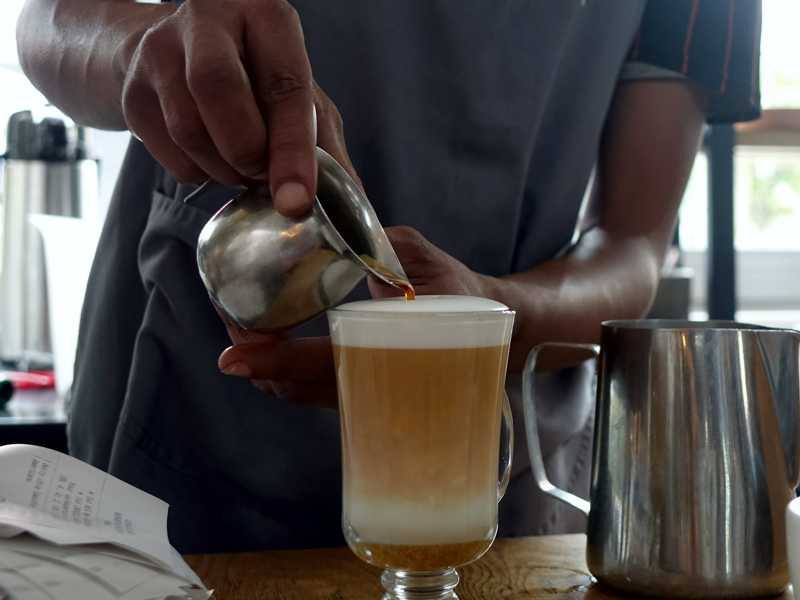
- Froth 150–200 ml milk in the glass (firm foam).
- Fill the glass to 3/4 with warm milk foam.
- Prepare 25–30 ml rooibos espresso.
- Slowly pour rooibos espresso through the foam into the glass (layering).
- Enjoy.
Continue to Barista & Espresso in the shop
If you’re ready to compare the options: here you can find pods, loose versions, and capsules at a glance.