


Royal Mountain – Rooibos without compromise from Kromme Valley Farm
Royal Mountain at a glance
- Farm / company: Kromme Valley Farm (family farm, 5th generation)
- Location: Sandveld (Western Cape, South Africa) – Farm: Kromme Valley Farm (Trekpoort, approx. 30 km north of Clanwilliam)
- 🗺️ Farm on the map: Google Maps · Apple Maps · OpenStreetMap
- Area: approx. 2,600 ha (of which approx. 700 ha rooibos)
- Main crop: rooibos
- Highlight 1: Sandveld character – shaped by heat, drought, and wind
- Highlight 2: very fine cut (fine sticks, approx. 1–2 mm) – quality over quantity
- Family / team: Schalk-Willem Laing (5th generation) · family & team on site
More farm details (as stated by Royal Mountain)
Certification:
Consistently organic cultivation – no fertilizers and no pesticides (farm philosophy).
Regenerative approach:
After 6 harvest years, the bushes are ploughed under in year 7; then follow 3 years of fallow (deliberately without cover crops).
Processing on site:
Cutting (including older, slower cutting technology for an especially fine cut), fermentation, and sun-drying on the tea court.
Biodiversity & protection:
No chemical inputs; multi-year fallow for soil recovery. Young seedlings are protected from wind stress, among other methods, by companion planting (e.g., oats between the rows) – yet nature remains the decisive factor.
Source of these notes:
Information as stated by Royal Mountain (self-presentation).
Royal Mountain products in our shop
We carry a curated selection. If you’re interested in more Royal Mountain products, feel free to message us — we’ll see what we can make possible.
Royal Mountain in 9 pictures
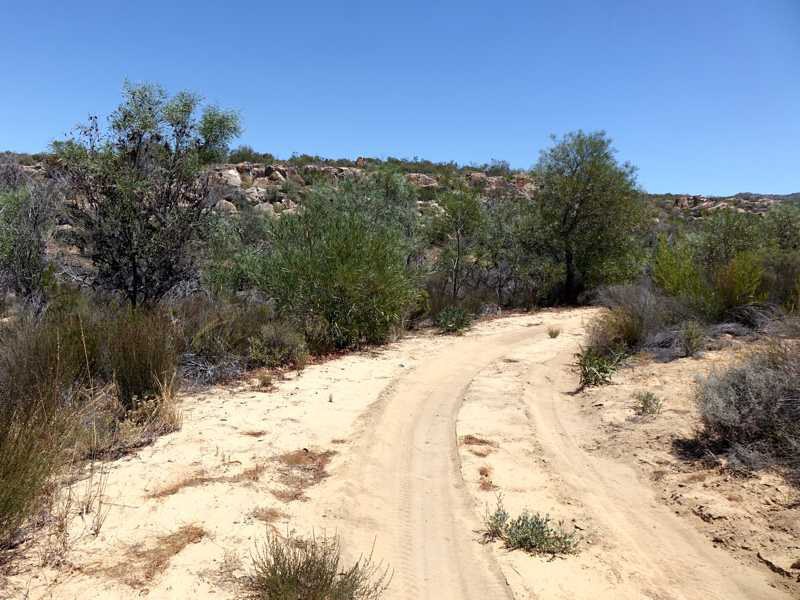
The road says it all: Sandveld is no easy stroll
This sandy track immediately slows you down to farm pace. Out here, nature decides — not the schedule. And you later taste that in the rooibos: not “smoothed out,” but honest, shaped by place and climate.
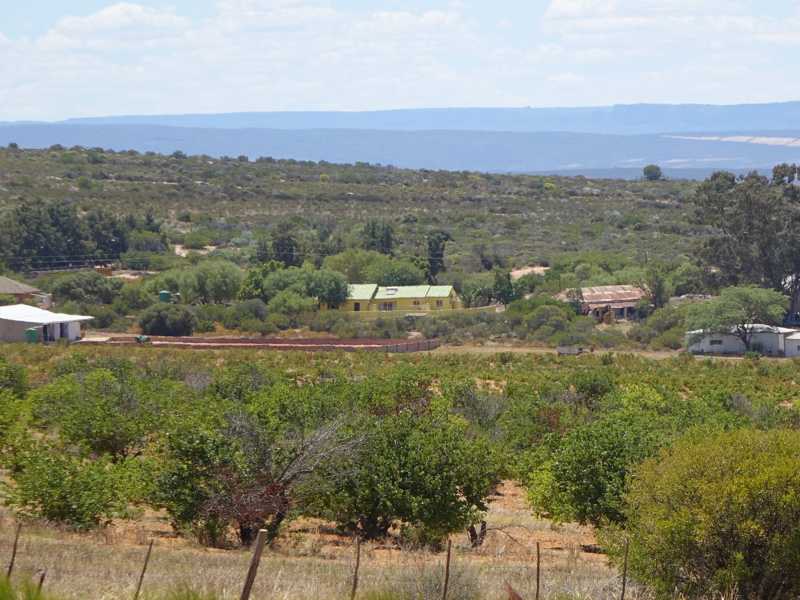
Farmhouse and tea court: work and home in one place
From up here you can see how closely everything sits together on Kromme Valley Farm. Rooibos isn’t anonymous industry here — it’s everyday life: family, team, and responsibility in one spot. That’s why “farm-direct” is not just a phrase at Royal Mountain.
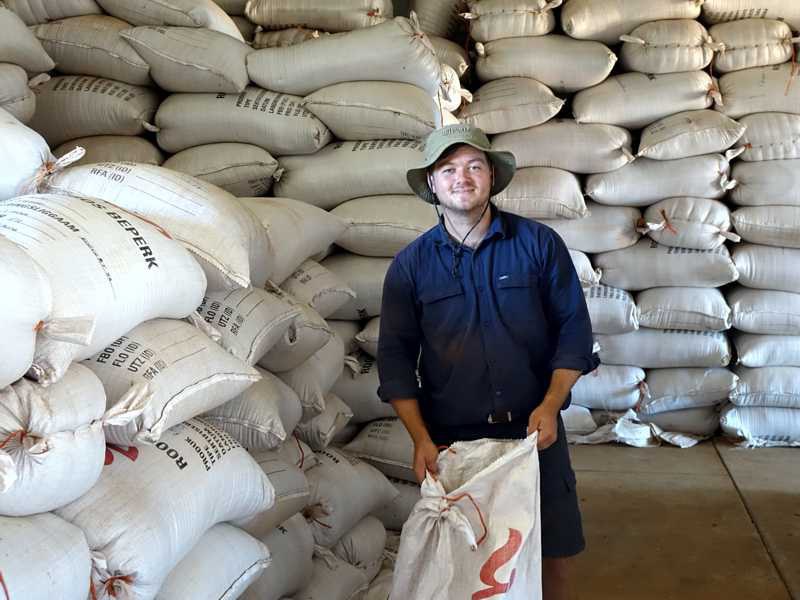
One farmer, one signature
Schalk-Willem stands in his rooibos store — in front of him an open bag with what the farm has produced. Royal Mountain is farm rooibos: not “from somewhere,” but from one pair of hands. Quality here isn’t a claim — it’s a daily decision.
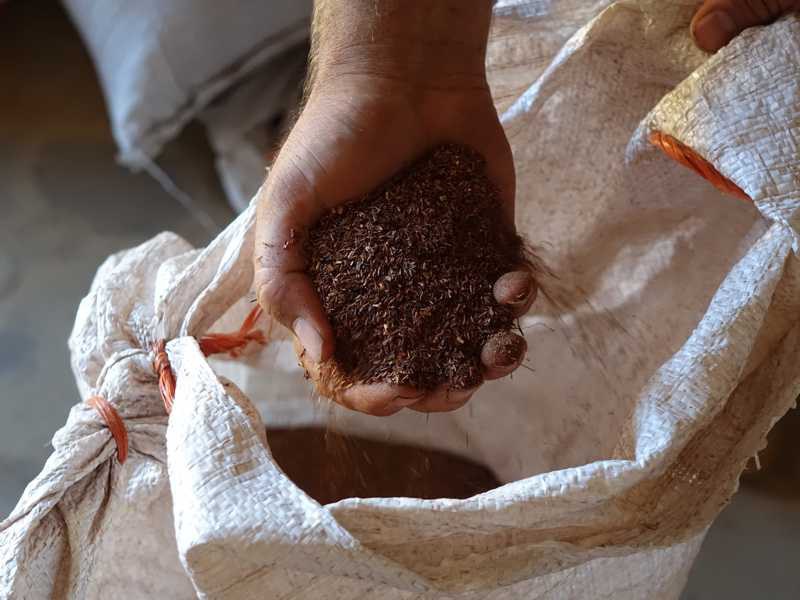
The cut: fine, short, consistent
A handful of rooibos is enough to see the difference: very fine sticks, deliberately cut short. That’s part of the Royal Mountain idea: quality over quantity — and in the cup, the Sandveld character shows particularly clearly.
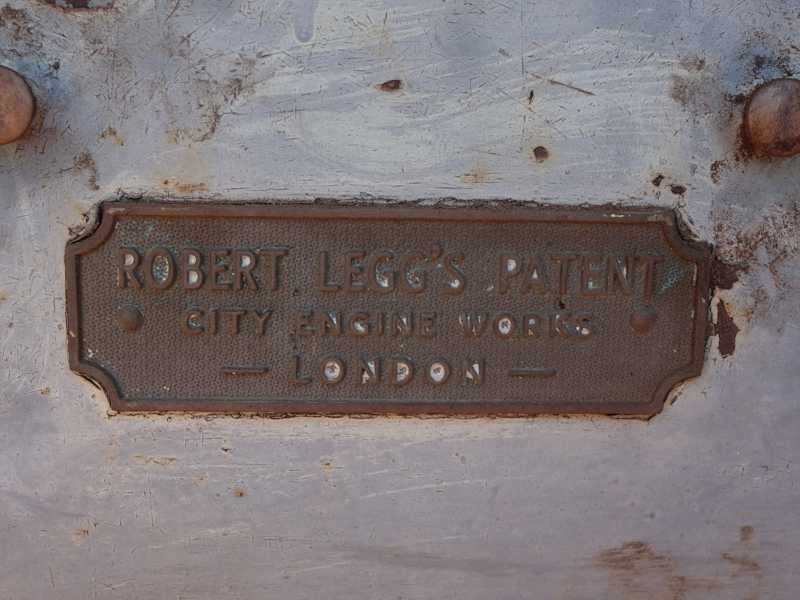
From tobacco to rooibos — one detail that suddenly explains everything
When I first saw the nameplate and the machine, it felt like a curious relic. In conversation on site, I learned it was originally used for cutting tobacco. And at the Clanwilliam Museum, you find out this region once did have tobacco farming. Today it cuts rooibos — slowly, controlled, exactly the way Schalk-Willem wants it: fine, short, consistent.
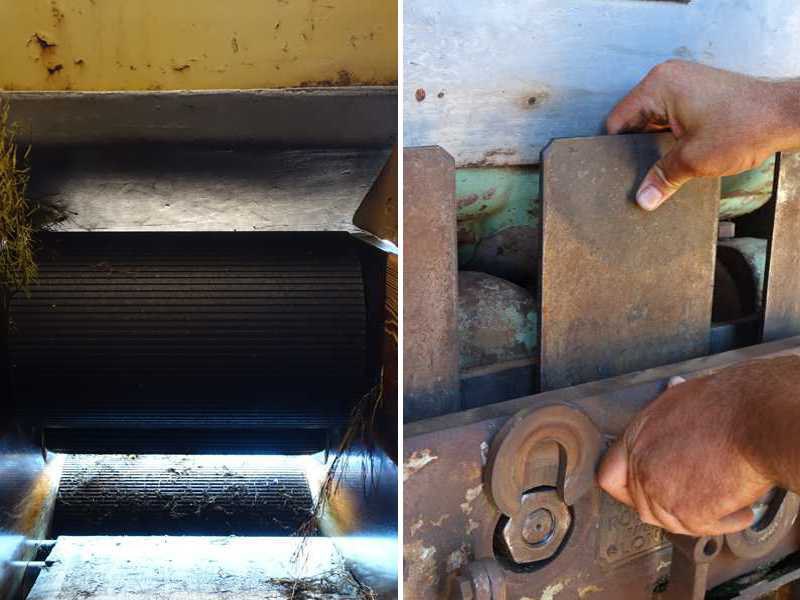
How the fine cut is made: rollers, blade, craftsmanship
On the left you see the feed rollers that guide the rooibos calmly and evenly. On the right you see the chopping blade and the setup — you quickly realize this isn’t “push a button,” it’s craftsmanship. And that slower, controlled way of working enables the especially short cut Royal Mountain is known for.
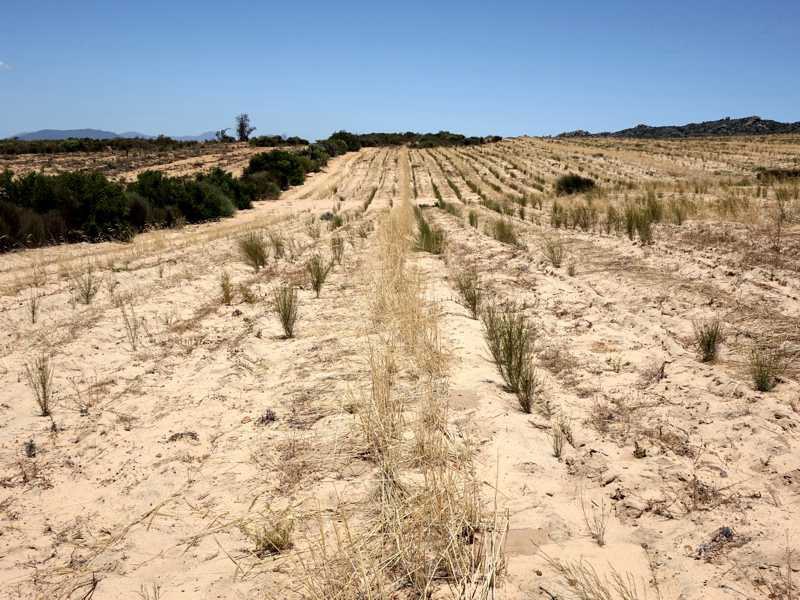
When nature decides: seedlings on trial
The empty spots show how harsh the conditions are: not every seedling makes it. It’s too dry here for direct seeding — so seedlings are planted, but even that doesn’t guarantee success. If the hot, dry easterly wind holds for more than ten days, seedlings die or stall in growth. Schalk tries to protect them, among other ways, with oats between the rows — but it remains a risk.
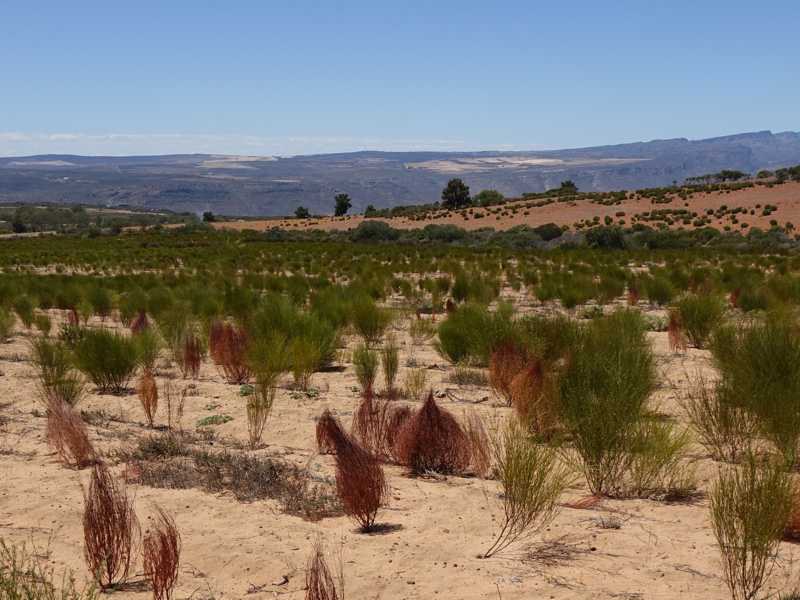
The other side of drought
Between the three-year-old bushes, much has dried out — rooibos remains. Once the taproot is deep enough to reach groundwater, the picture shifts: rooibos stabilizes while other plants give up. That toughness of place shapes the clear, distinctive character in the cup.
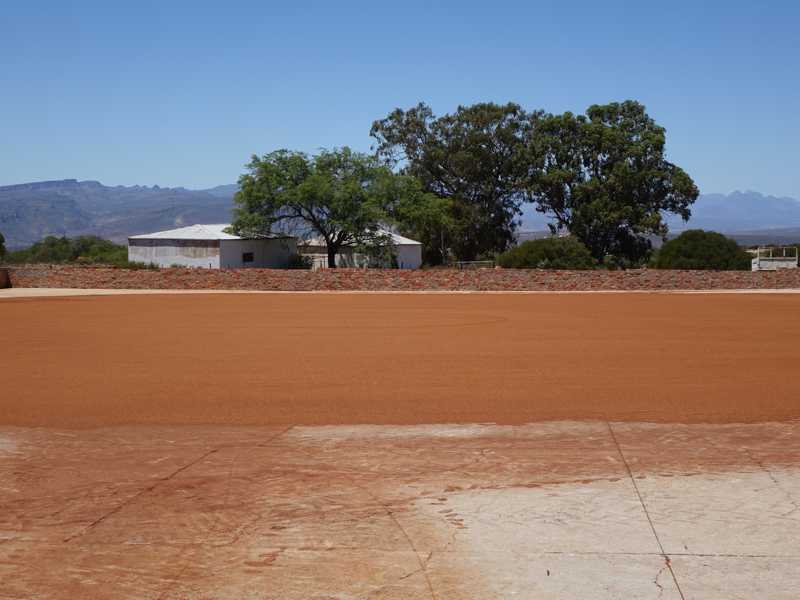
Tea court: sun, time, patience
On the tea court, the fully fermented rooibos dries in the sun. The step looks simple — but it’s crucial: warmth, air, and time are part of quality. That’s why a farm rooibos like Royal Mountain doesn’t taste “standard,” but like its origin.
Trekpoort, Sandveld and the Laings: How I found Royal Mountain — and why “without compromise” is meant literally here
In March 2022, I booked accommodation in Clanwilliam with the Kellerman family. Both are retired — and Mr Kellerman worked for around 30 years at Rooibos Company Ltd. in Clanwilliam, one of South Africa’s major processors. We quickly got talking; I shared about my rooibos shop in Germany and that I import farm-owned brands into the EU.
What I learned on those evenings were not “internet facts,” but everyday rooibos knowledge. And then something unexpected was added: Mrs Kellerman told me about cancerbush for the first time — she showed me products from Clanwilliam and spoke about people for whom it offered hope in a hard time. In that mix of tea, plant knowledge, and real life stories, I understood again why I make these trips: because behind every product, there are people.
At some point, Mrs Kellerman said: “If you really want to understand farms, you should also visit the Laings.” She knew the family, gave me a phone number — and that’s how contact with Kromme Valley Farm near Trekpoort began. On the phone, Mrs Laing explained the route: I could drive only about halfway with my car — for the rest, a 4x4 was needed. So I should leave my car, and I would be picked up.
And that’s how I arrived on the farm for the first time on 03/03/2022. When I stepped into the living room, three sisters and the mother were already waiting — with an expectant look. Hospitality matters on farms. You don’t feel like a customer, but like a guest. The family told me about their Scottish roots and that they are living here today in the fifth generation.
After that, Schalk-Willem Laing showed me the cutting area and the tea court — and he spoke nonstop about where he wants to take the farm: toward consistently natural, organic cultivation. His pride was an older cutting machine that looks like a guillotine: the blade strikes from above — enabling an especially short cut. For him, that is part of quality: not faster, not bigger, but more controlled, finer, cleaner.
In the fields, the philosophy became tangible. After a cycle ends, they don’t simply “keep producing”: after six harvest years, the bushes are ploughed under, and the soil is left fallow for three years — without cover crops. And then there are the conditions you can’t argue away: at this elevation, seedlings first have to make it through until their taproots are deep enough. If hot, dry easterly winds blow for many days, seedlings die or stall. North-westerly winds, in contrast, often bring moister air.
That’s why the phrase “rooibos without compromise” truly fits here: anyone working this way accepts yield fluctuations — because taste, soil, and responsibility matter more. And that is Royal Mountain to me: a rooibos with Sandveld character, where you don’t need to explain the origin — you can taste it.