

Meerlandsvlei Farm – Cancer Bush (Kankerbos) with origin and craftsmanship
Meerlandsvlei at a glance
- Farm: Meerlandsvlei Farm (family-run farm of the Rossouw & Schoeman families)
- Legal name & address: Meerlandsvlei Boerdery (Pty) Ltd., Posbus 51, Eendekuil 7335, Western Cape, South Africa
- Brand: ZITHANDE HERBS (herbal products from Meerlandsvlei)
- Region: Western Cape, South Africa – West Coast District / Bergrivier
- 🗺️ Farm on the map: Google Maps · Apple Maps · OpenStreetMap
- Farming area: approx. 100 ha · of which 1–4 ha are Cancer Bush/Kankerbos (depending on the year)
- Main activities: grain farming · cattle farming
- Fynbos/herb crops: Cancer Bush/Kankerbos (Lasseria frutescens, formerly Sutherlandia) · plus, among others, olive leaf, buchu, African wormwood & moringa (depending on product format)
- Setting & landscape: northern edge of the Swartland – wide plains with views of the Olifants River Mountains
- Experience: family knowledge of Cancer Bush since the 1950s/60s – not a trend, but part of everyday farm life
- Contacts: Mr Rossouw · Herma Schoeman (Schoeman family)
More farm details (short)
Cultivation & harvest:
Meerlandsvlei is first and foremost a classic farm (grain & cattle). Cancer Bush is a dedicated family project: the plants are harvested/cut depending on growth and then gently dried before being processed further.
Processing:
For tea, the dried plant material is cut and sifted. For other product formats (e.g., capsules or cream), Cancer Bush is incorporated into suitable recipes – always with the aim of preserving the character of the plant and making the products practical for everyday use.
Tradition (family knowledge):
In the family, Cancer Bush has been known as a tea since the 1950s/60s – as part of farm life and passed-down plant knowledge.
Note:
We share the origin and the knowledge around the plant. Health-related statements are not a performance promise.
Meerlandsvlei products in our shop
Our range grows step by step: We carry a curated selection. If you’re interested in more Meerlandsvlei products, feel free to message us – we’ll see what we can make possible.
Meerlandsvlei in 9 images
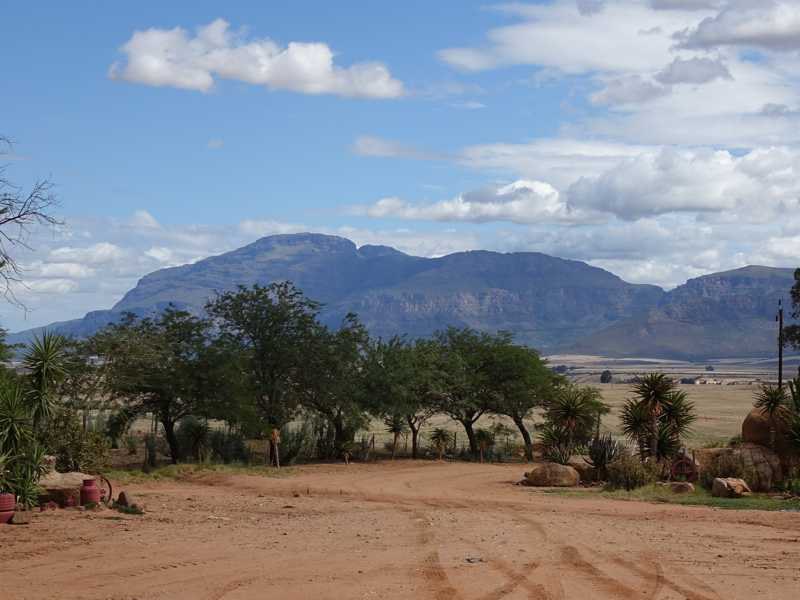
The north on the horizon
From Meerlandsvlei you look across open plains – until the Olifants River Mountains draw the line. For me, that’s where the flat land slowly transitions into a more mountainous world.
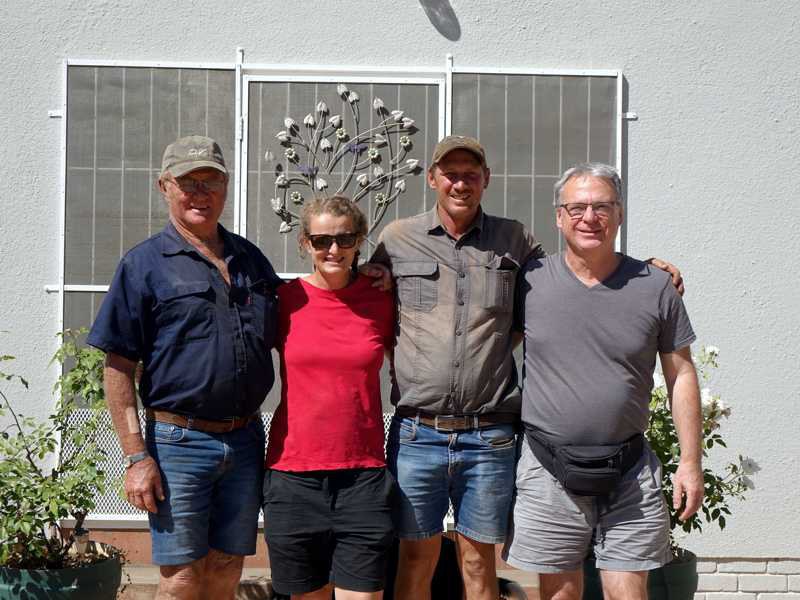
The people behind it
Mr Rossouw, his daughter Herma and her husband – and my visit to the farm. For me, encounters like these are why I buy farm-direct: because real people stand behind every product.
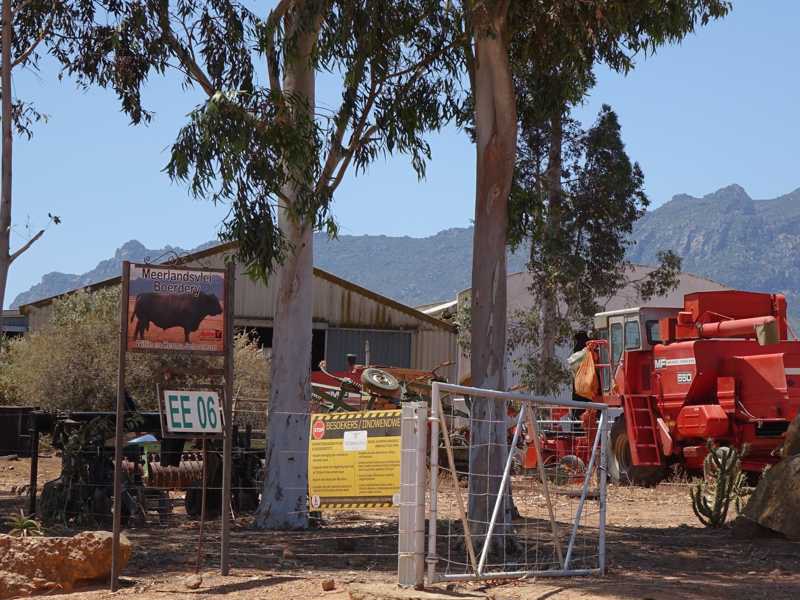
Arriving at Meerlandsvlei
A farm sign, a gate, machines in the yard – Meerlandsvlei is a working farm. Grain and cattle are the everyday business; Cancer Bush is the family project that continues alongside it.
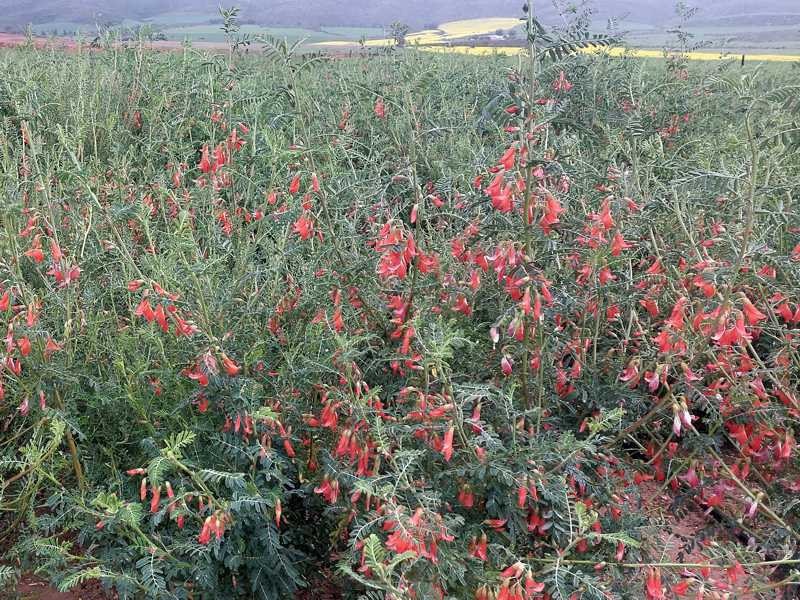
Cancer Bush in bloom
Between green and dust, the blossoms shine like small points of color. A moment that makes you feel: this isn’t “just any raw material” – it’s a plant with character.
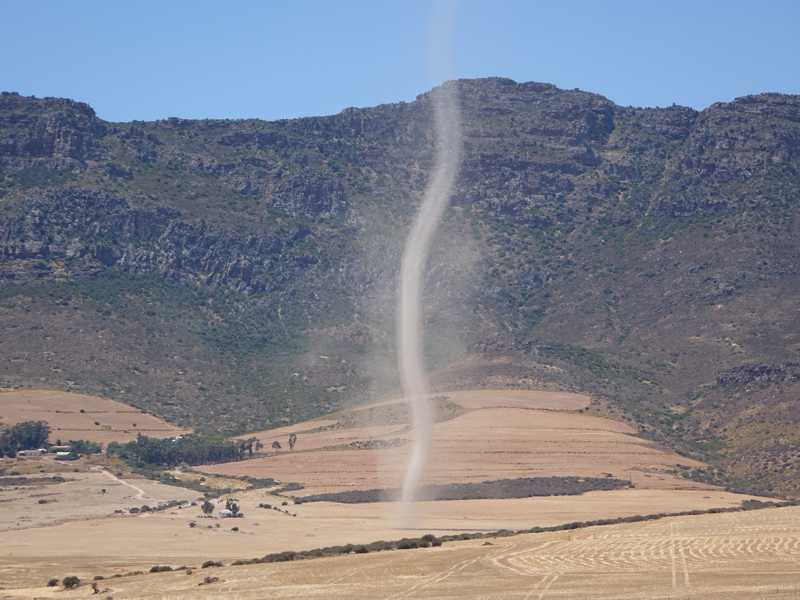
When the plain comes alive
A dust devil moves across the fields – and behind it, the mountains stand still like a wall. That’s how Meerlandsvlei feels: wide, dry, and sometimes surprisingly alive.
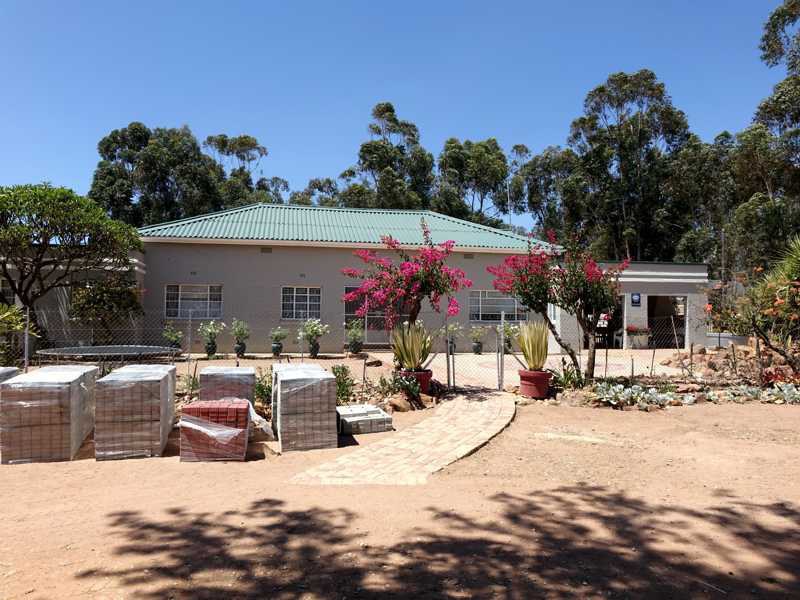
Where farm life is at home
The farmhouse isn’t a “showroom” – it’s where everyday life happens, with a garden, shade, and always something being improved or built. That mix of life and work is what makes Meerlandsvlei feel so real.
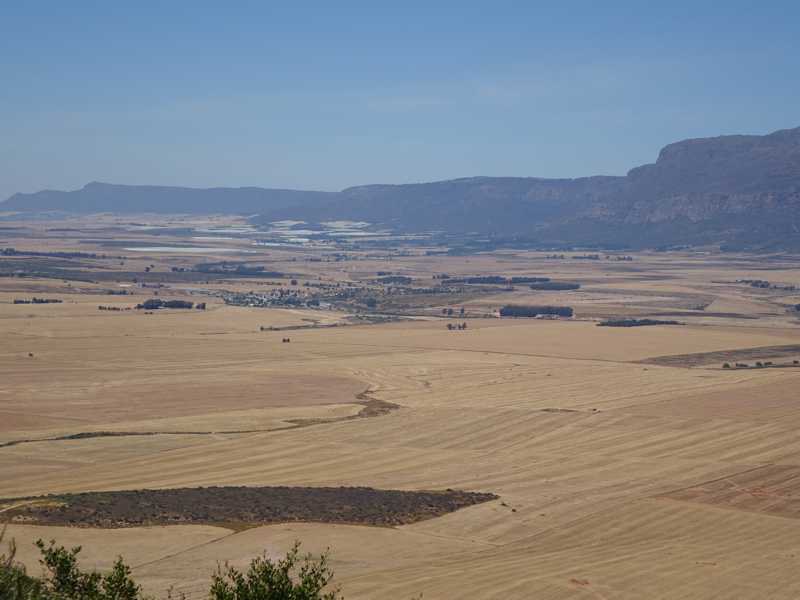
Back to the plain
From above, the Swartland looks like a calm patchwork of fields and roads – wide, open, almost endless. Somewhere down there lies Eendekuil, and you understand why Meerlandsvlei is shaped so strongly by space and wind.
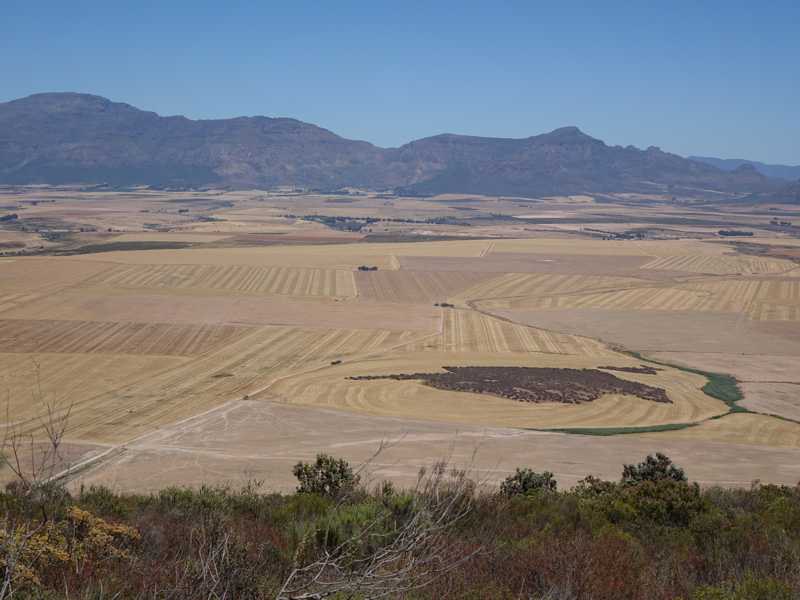
Fields, openness, Swartland
From up here you can see what the Swartland is known for: large harvested grain fields, clear lines, lots of sky. Meerlandsvlei lies in this openness – a working farm where agriculture is everyday life and Cancer Bush has its fixed place as a family project.
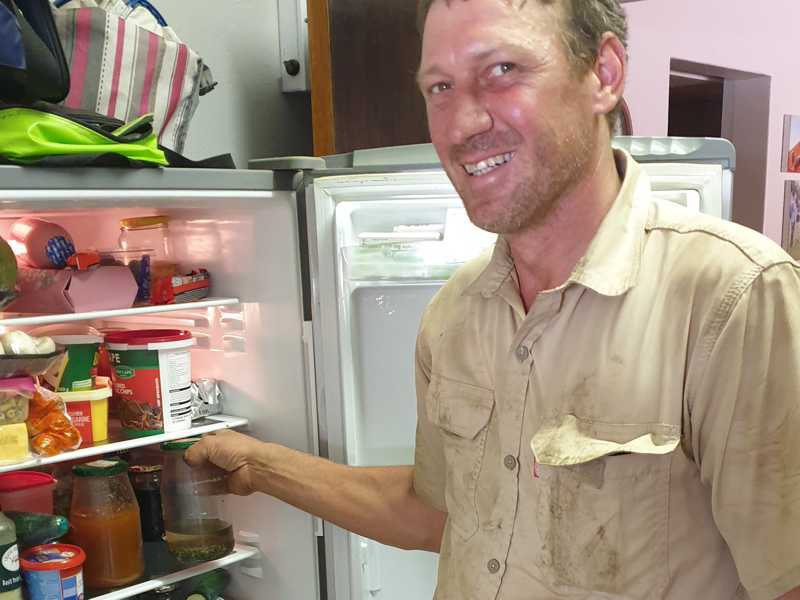
Everyday farm life, uncomplicated
Cancer Bush is simply part of life here – even during work. Drunk cold it’s milder, they say at Meerlandsvlei, which is why they like to set it up in the morning.
Meerlandsvlei Farm and Mr Rossouw: Why Cancer Bush is more than just a plant here
Sometimes a farm story doesn’t begin with a grand plan, but with a small hint at the right moment. In my case, it was a tip from Clanwilliam – and two products someone put in my hands: a Cancer Bush cream and capsules. Until then, I had never heard of Cancer Bush. That mix of curiosity and “What is this, actually?” was what led me to Meerlandsvlei Farm.
On 6 March 2023 I visited for the first time. Anyone who knows farms understands: you are not “received” like in a hotel – you are taken in. Warmly, directly, without detours. And pretty quickly it becomes clear that Meerlandsvlei is, above all, a classic farming operation: grain farming and cattle breeding shape everyday life. Alongside that, there is a second pillar – almost a family project – around herbal products: besides Cancer Bush, also olive leaf, as well as buchu, African wormwood and moringa – partly as capsules, partly as tea (also in tea bags).
On my second visit in late 2025 – and then again on 4 December 2025 – I also met Mr Rossouw, Herma Schoeman’s father. In conversations like these you quickly realise: some things on farms aren’t “trends”, but habits passed down over generations.
When I asked him how the family got into Cancer Bush, his story didn’t begin with a market or a product idea, but with his mother. Back in the 1950s and 1960s, he said, she had got into the habit of drinking Cancer Bush tea regularly – not because someone recommended it, but because it was simply natural to her. No marketing language, no label logic – more like the way families adopt things: because you’ve seen it, because it belongs, because it fits everyday life.
His own ritual feels the same: practical, grounded, without fuss. He explained how he prepares the tea – and that it doesn’t have to be complicated. In essence: water, one or two teaspoons, let it steep. If you find the taste too strong, you simply make it milder. For him the important part isn’t the “perfect” instruction, but the moment it becomes part of the day.
What stayed with me was a small, almost casual idea: he brews a glass in the morning and puts it in the fridge. Drunk cold, he said, the tea is milder for him – and that’s how Cancer Bush becomes a personal companion through the day. Not staged, just routine.
Then we talked about the Cancer Bush cream. And this was typically Rossouw: first a big statement, then a laugh, then the correction. At its core it wasn’t about numbers, but the idea behind it: a cream that doesn’t just carry a “bit” of plant content as label decoration, but takes Cancer Bush seriously – based on a simple, everyday recipe.
These moments are why I visit farms. Not to collect “facts from the internet”, but to understand how things come to be: through habits, family knowledge, and decisions made on the farm – sometimes over decades.
And then there’s the second story that you could hardly invent today: how the brand name ZITHANDE HERBS was born. Before there was even any thought of marketing, Rossouw once talked about Cancer Bush at an event. While he spoke, someone kept calling out a word into the room: “Zithande!” This word comes from Xhosa and roughly means: “Love yourself.” That phrase stuck. Not as an advertising slogan, but as an attitude. And at some point it became the name under which the products are known today: ZITHANDE HERBS.
When you visit Meerlandsvlei, you quickly understand: Cancer Bush is not the “main business” here – and that’s exactly what makes it credible. The farm lives from grain and cattle. Cancer Bush is something that comes from the family, was passed along, and is now carried forward by Herma Schoeman and her family. A project that isn’t loud, but steady. And that’s exactly why it fits so well with what I want to show in my shop: the people behind it.