



Skimmelberg – Organic Buchu & Rooibos from the Witelskloof/Waterval Farm
Skimmelberg at a glance
- Company: Skimmelberg (Pty) Ltd, founded 2007
- Location: Cederberg near Clanwilliam – farm: Witelskloof/Waterval
- 🗺️ Farm on the map: Google Maps · Apple Maps · OpenStreetMap
- Buchu & Rooibos area: approx. 2,000 ha
- Field-grown rooibos: 6 fields staggered by age → one field replanted each year; about 5 harvests per field, then mulched & ploughed in (one pass) + 1 year cover crop (often oats)
- Wild rooibos: harvested only every 4 years → can reach 60–70 years
- Buchu: cultivated on 16 fields, kept at around 1 m on purpose (perennial, productive long-term)
- Buchu oil: approx. 100 kg buchu → 1 kg buchu oil (steam distillation on the farm)
- Family: The farm has been run for generations by the Slabbert family. The main focus of the operation is citrus farming.
More farm details (as stated by Skimmelberg)
Certification:
CERES
Regenerative practices:
Compost tea from worm compost (vermicompost) – a water-based extract applied to the soil
Distillation:
CO₂-neutral fuels used for essential oil distillation
Biodiversity & conservation:
Part of the Greater Cederberg Biodiversity Corridor (GCBC) and conservation areas / nature reserve in partnership with CapeNature
World Heritage region:
Part of the UNESCO World Heritage site “Cape Floral Kingdom”
Rooibos Biodiversity Initiative (RBI):
Pilot group (25 farms)
Fairness & traditional knowledge:
Bioprospecting permit and benefit-sharing agreement (San & Khoi-Khoi, 2013)
Source of information:
Information according to Skimmelberg (company self-description).
Skimmelberg products in our shop
- Organic Rooibos & Organic Buchu (tea) + selected BuchuLife capsules
- Buchu oil & care products (e.g., soaps / skincare)
Our selection grows step by step: We started with tea and later expanded with capsules and soaps. If you’re interested in more Skimmelberg products, feel free to message us — we’ll see what we can make possible.
Skimmelberg online:
Skimmelberg in 8 pictures
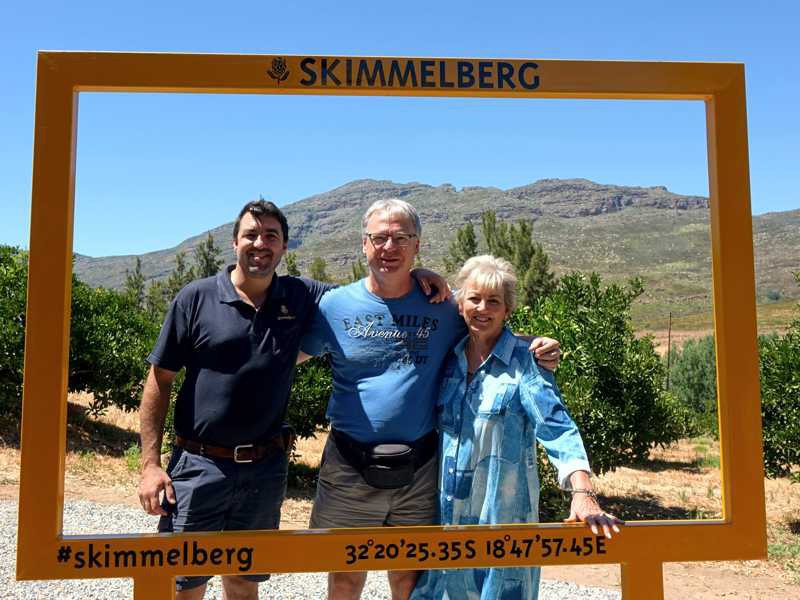
A place with real faces.
Skimmelberg is family work in the Cederberg — not anonymous, not interchangeable.
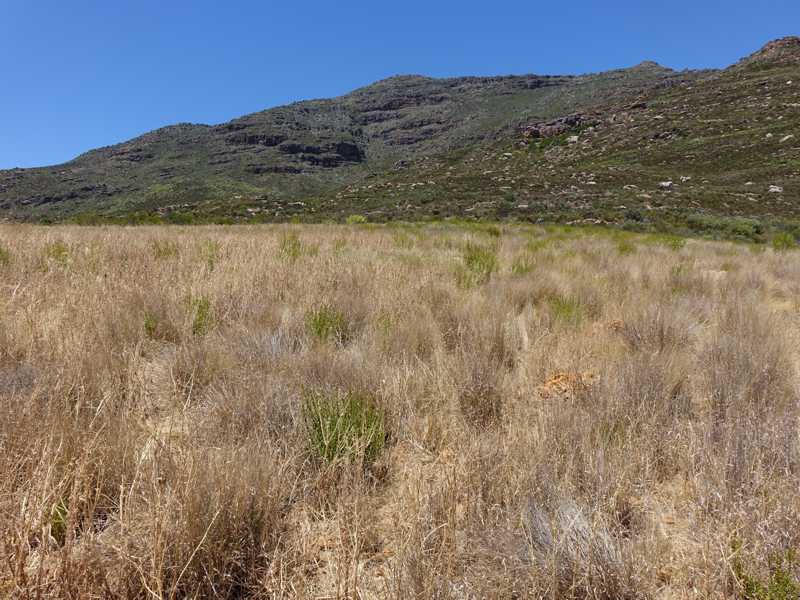
Wild means: rare.
Between dry grass there are only a few bushes — and that’s exactly why protection isn’t a trend here.
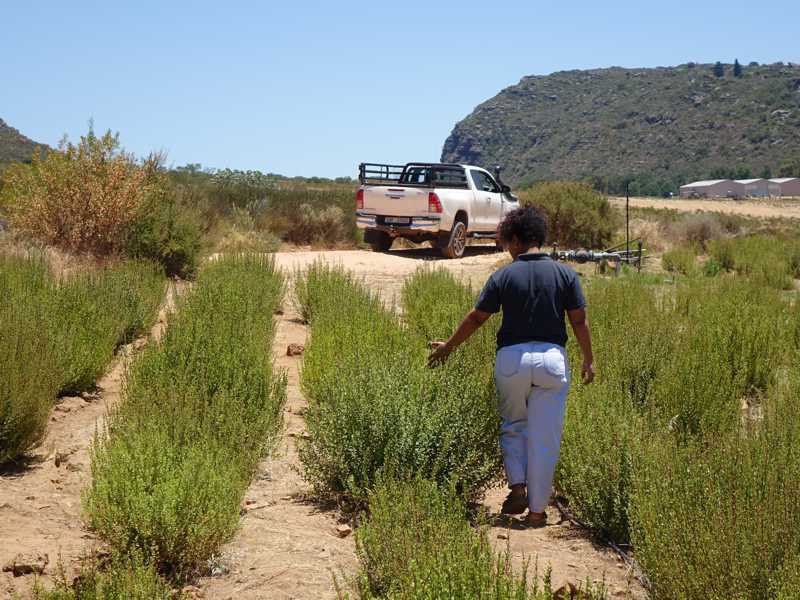
Organic is routine, not a label.
Buchu is kept deliberately compact — around 1 m — so care and harvesting stay clean and consistent.
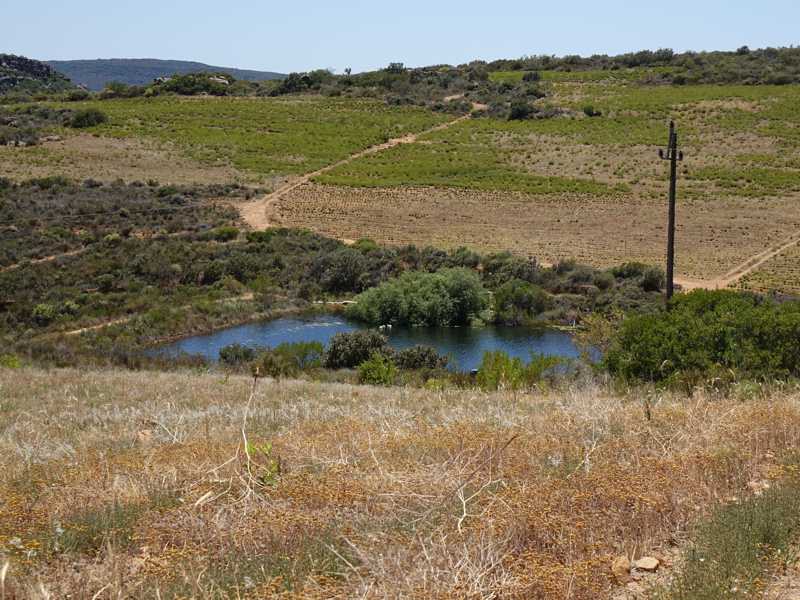
Every drop is a decision.
In the Cederberg, water is precious — it’s planned, stored, and used with intention.
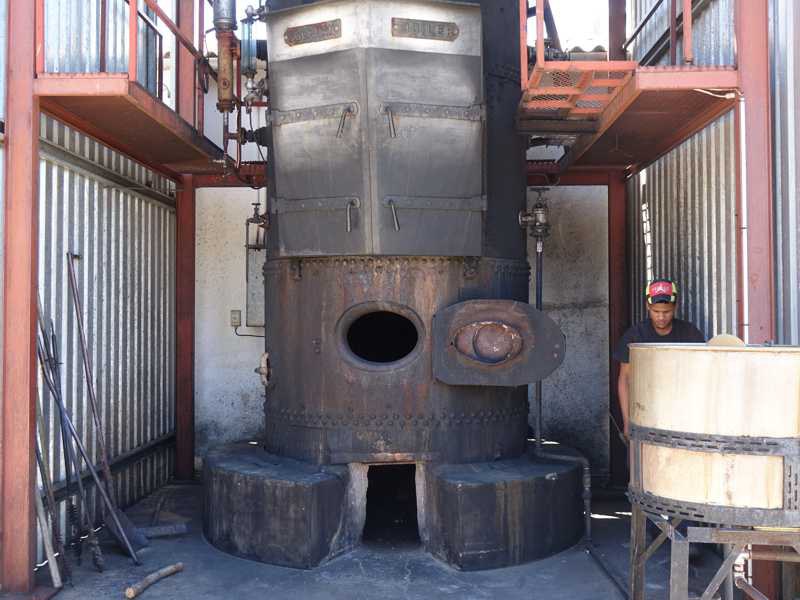
Not just grown here — processed here.
Buchu oil is produced with steam right on the farm: about 100 kg of buchu yields roughly 1 kg of oil.
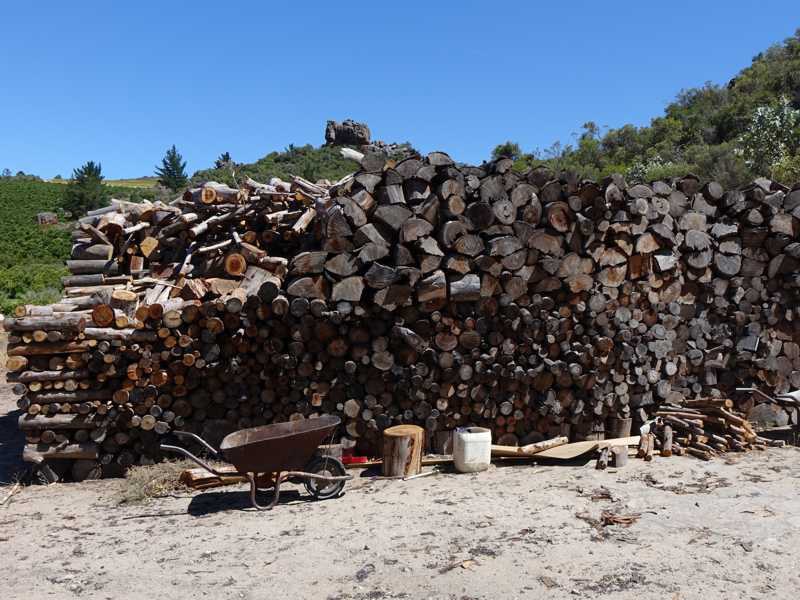
Energy you can’t hide.
Steam is generated using local wood — processing here is visible, tangible, real.
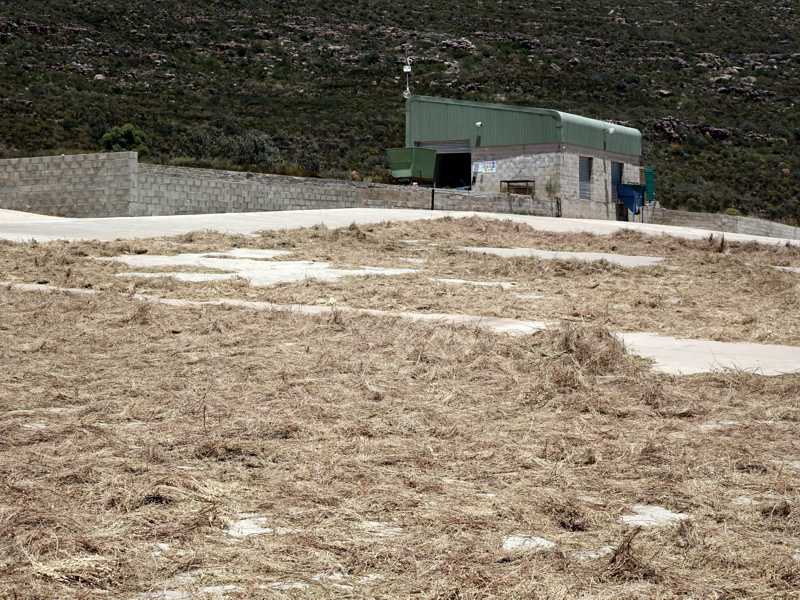
After the oil, it’s not over.
What remains after distillation isn’t thrown away — it goes back into the cycle.
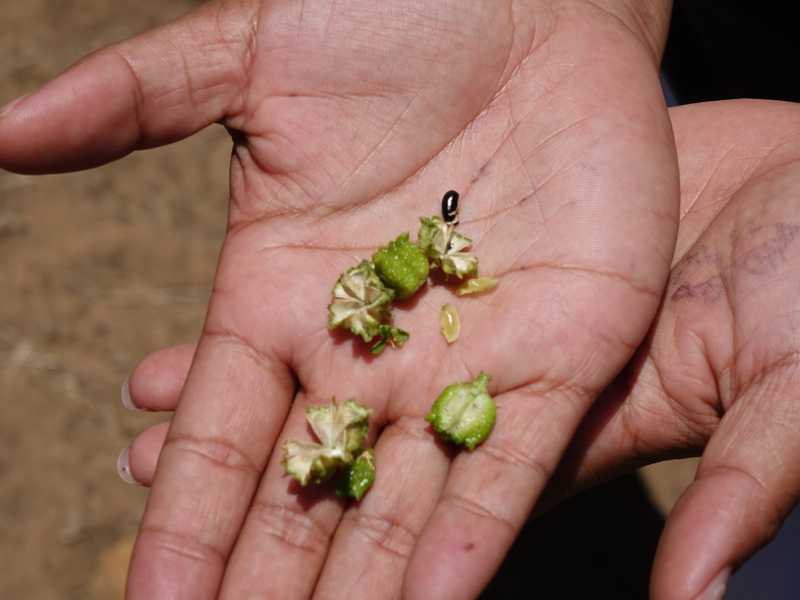
We think in years, not weeks.
Seed, fruit, plant: buchu and rooibos are living stands — and you treat a stand differently than raw material.
Witelskloof/Waterval in the Cederberg: tea from a place that isn’t negotiable
Skimmelberg is the name under which the Slabbert family makes their work in the Cederberg visible: Skimmelberg (Pty) Ltd, founded 2007. The brand is young — the land is not. Buchu and rooibos have been part of this landscape and this farm for generations. In 2007, the step was to organise organic farming, on-site processing and export under one name, so that origin is not only told, but traceable.
When you stand here for the first time, you quickly realise: the Cederberg is not a “comfortable” place. It’s dry, vast, sometimes harsh. That’s exactly why everything that grows here feels even more precious. Wild buchu doesn’t look like a postcard — between dried grasses there are only a few shrubs, tough and fragrant. That’s the moment you understand why protection doesn’t start as a slogan, but as a reflex: when something is that rare, you can’t pretend it’s endless.
That’s why Skimmelberg works with a clear contrast you can see on the farm: wild populations — and controlled cultivation. Buchu grows on 16 fields. The shrubs are deliberately kept at around 1 m — not for “cosmetics,” but so care and harvesting stay clean, predictable, and quality-focused. Organic here isn’t a label; it’s a daily decision between the rows.
And then there’s processing — not somewhere else, but on site. At Skimmelberg, buchu is also processed into buchu oil. Distillation is where you decide whether plant material becomes character. About 100 kg of buchu yields roughly 1 kg of oil. That number isn’t a marketing message — it’s reality. It reminds you how much plant, time, and work sits behind a small result.
With rooibos, the mindset shows especially clearly in the rhythm. Field-grown rooibos is spread across six fields by age. Each year, one field is replanted and one field moves out of the cycle. About five harvests are taken per field; then the old shrubs are mulched and ploughed in in a single pass, and the soil gets time: one year of cover crop, often oats, so the system can regenerate. This isn’t the logic of “maximum out.” It’s the logic of “so it comes back.”
And then there’s something you can’t plan — only respect: wild rooibos. The farm has rare wild populations. This rooibos is harvested only every four years. Not because you couldn’t harvest more often — but because you choose not to. That way, the plant can reach its natural age of 60–70 years. That’s not a romantic idea. It’s a decision: less short-term yield, in exchange for protecting the stands — and a different way of understanding time.
Skimmelberg describes its work as organic and regenerative — with things like compost tea from worm compost (vermicompost), a water-based extract applied to the soil, plus further measures, certifications, and biodiversity initiatives. For us, one thing matters most: whether you can actually see it in the operation. In the water that’s collected. In rows that are cared for. In stands that aren’t “pushed to the limit.” In processes that remain visible.
So when you choose Skimmelberg, you’re not only buying organic. You’re choosing tea from a place with clear boundaries — and a farm that doesn’t see those boundaries as a problem, but as a benchmark.