



What Is Rooibos Tea?
Many people have already seen or tasted rooibos. For some, it is simply a name they have heard somewhere before. Others know it as a mild red tea from a familiar range of teas. And yet people often only begin to get closer to rooibos when they look beyond that first impression — or encounter it in its homeland, in the Cederberg region around Clanwilliam.
My own introduction began with a simple encounter with rooibos. In March 2015, I came across it in the Rosehill Mall in Port Alfred in the Eastern Cape, when I had my first Red Cappuccino there. That was my first real contact with rooibos — and the beginning of a much longer journey of discovering this world. It quickly became clear to me that rooibos can be far more than what people tend to associate with it at first glance: not just one single taste, not just one single direction, but a whole world of warm, soft, spicy, fruity and surprisingly different impressions.
To me, rooibos is one of those things you do not come to know all at once. First there is an encounter, then an impression — and only gradually does it become something more familiar.

Many People Know Rooibos – but Often Only from a First Impression
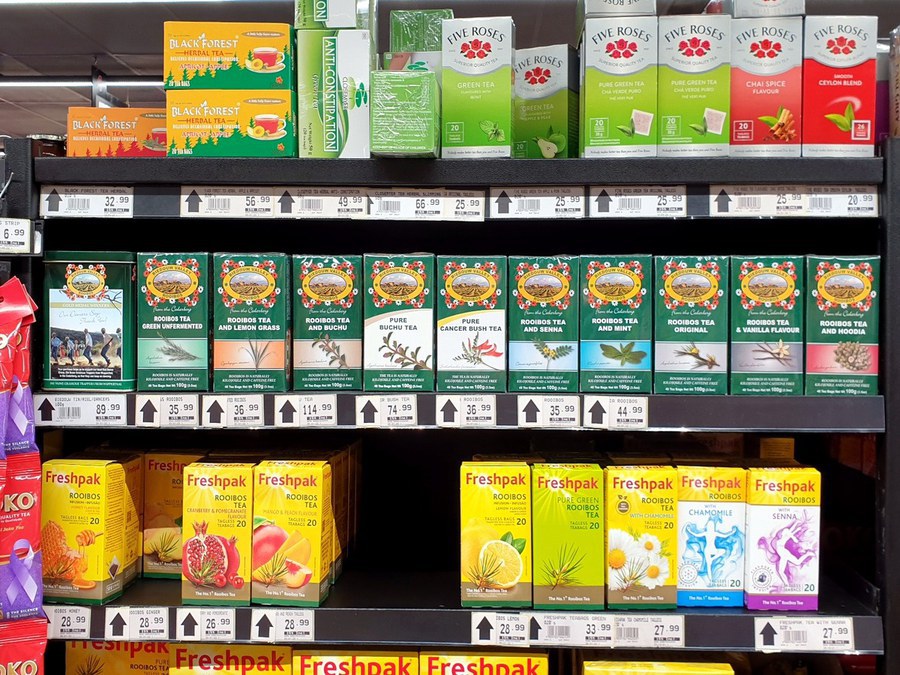
Outside South Africa, rooibos usually does not appear as something people were actively looking for. More often, it turns up by chance in the middle of everyday routines. You are in the supermarket for something entirely different, you pause for a moment in front of the tea shelf, and then you find yourself picking up a pack of rooibos without really being able to explain why.
That is how rooibos begins for many people: as a first, still tentative encounter. You taste it, perhaps remember a mild, soft, slightly sweet note — and that surface impression is often what stays with you at first. At that moment, much more than that is often not yet really tangible.
Part of the reason is that, the first time you drink rooibos, it does not easily fit into the flavours you already know. It does not simply belong in the familiar categories of black tea, herbal tea or fruit tea. At first, your taste memory has no real point of comparison. Only once that first impression has found its place do the finer differences gradually become noticeable — the warm, spicy, fruity or softer nuances that at first remain behind that initial taste.
So for many people, rooibos is not misunderstood at first — it is simply not yet fully experienced.
Rooibos Is Not Simply “Mild”
Once rooibos is no longer entirely new, the way you perceive its flavour often changes as well. What may first have stayed in your memory as simply mild, soft or slightly sweet suddenly feels more open after a little time. You begin to notice that there is more behind that first impression.
Perhaps the first thing you notice is that one rooibos feels warmer than another. One may seem softer, rounder or almost creamy. Some suggest honey or caramel, while others feel clearer, finer or lightly spiced. And with blends, it often becomes even more obvious how well rooibos can carry other ingredients without losing its own character completely.
That is part of what makes it special. Rooibos does not always demand attention straight away. Much of what makes it interesting appears only gradually. Not because its flavour is hidden, but because you first have to place it within your own taste memory. Only then do the finer differences begin to stand out.
So the first mild impression gradually turns into something larger: the sense that rooibos does not move in just one direction, but can become a whole world of flavour.
Why Rooibos Often Only Shows What It Really Is in South Africa
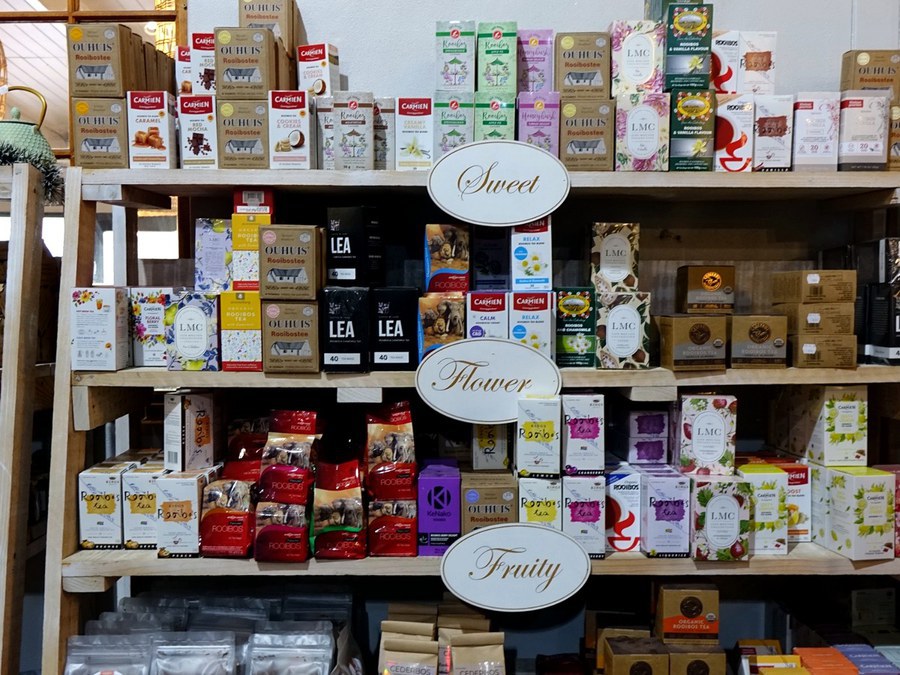
Outside South Africa, rooibos is usually encountered either in its plain form or in just a few flavour directions that are easy to approach — vanilla, caramel or cherry, for example. What stays in the memory is often not its full breadth, but rather a first, surface flavour impression.
Once that first impression is there, it easily becomes the inner benchmark. You unconsciously feel that you already know rooibos, even though in many cases you have only come to know the form in which it is most easily offered and understood outside its place of origin.
Only closer to its homeland does it become clear what else is still there. Then the differences between farms, brands, blends and signatures begin to show. Rooibos no longer feels like something that always tastes more or less the same, but like a larger world that opens up only little by little.
What Makes Rooibos More Tangible at rooibostee.shop
That is exactly why I never wanted to present rooibos as just another tea in a product range. From the beginning, I was interested in where it comes from, who grows it, how it is thought about on the farms, and why individual brands, blends and stylistic directions can differ so much.
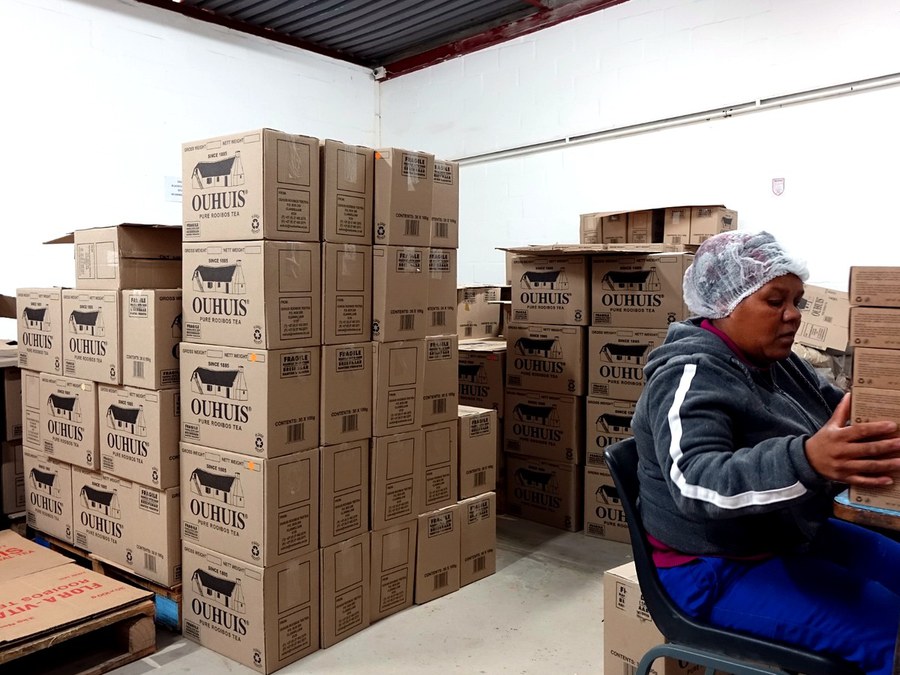
That is why, for me, it is not only about the finished tea in the pack. I visit partner farms in person, see how rooibos is grown, harvested, processed and packed, and get to know the people behind the products. It is only through that closeness that it becomes tangible to me why rooibos is never simply always the same.
Many of the rooibos teas in my shop do not emerge far removed from their origin, but directly from the ideas of the farms themselves. Rooibos is not only grown and harvested there. Decisions are also made there about which blend, which aroma profile and which product form suits that particular rooibos. That helps explain why individual products differ not only in flavour, but also in attitude, direction and signature.
That is exactly what I want to make visible at rooibostee.shop: rooibos not as anonymous merchandise, but as part of a South African world of origin and products, in which farms, brands and people are allowed to have their own character.
Why Rooibos Works So Well in Blends
The more closely I got to know rooibos, the more clearly I understood why it works so well in blends. It brings its own aroma with it — one that is present without always pushing itself into the foreground. That is one of its particular strengths. Rooibos can carry and connect other ingredients without completely losing its own character.
That is why spices, blossoms, herbs or fruits often feel rounder, softer and more harmonious on a rooibos base than one might expect at first. It does not simply create a flavoured tea, but often a blend in which the different ingredients come together more naturally.
I saw exactly that again and again in South Africa. Many producers do not develop their blends according to some generic formula, but out of the character of their own rooibos. They think about what suits it, what complements it, and in which direction it can be taken further. That is how blends emerge that do not feel interchangeable, but carry their own idea and often their own distinct signature.
To me, that too belongs to the world of rooibos: not only the pure tea itself, but also the way new flavour directions can grow out of it without the origin being lost entirely.
How You Can Continue Exploring the World of Rooibos
Perhaps you are simply looking for a rooibos that feels soft, familiar and easy to drink every day. Perhaps you would like to discover blends with more fruit, spice or depth. Or perhaps you first want to understand more clearly why rooibos is, for many people, far more than just a naturally caffeine-free tea.
That is exactly what this page is meant to be: a first point of entry. It is not meant to make rooibos artificially complicated, but to open the view to the fact that there is often more behind the first impression.
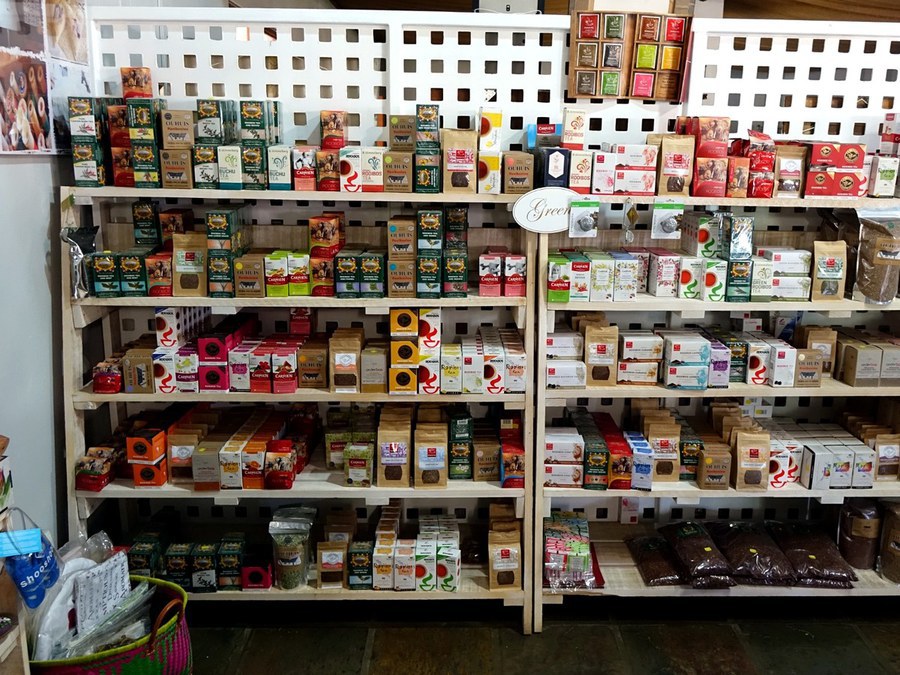
If you would like to understand rooibos more broadly as a plant, a region of origin and a field of knowledge, the next step is the page “Understanding Rooibos”. If you would like to look more closely at the farms, brands and the people behind them, the portrait and origin pages will take you further. And if you would prefer to go straight into the product world, you can also find your way from here to the rooibos sections in the shop.
My aim is not to turn rooibos into specialist knowledge. I simply want to bring it closer to what it actually is in its homeland: not just a single tea, but part of a South African world of origin, plants and products.
Read more about Rooibos
Related topics:
Buchu Honeybush Cancer Bush