



Understanding Rooibos
More about Rooibos
Understanding Rooibos
Many people know rooibos only as a name on a package. This is exactly where this page begins: not as an encyclopaedia text and not as a product overview, but as an introduction to a rooibos world that is larger than the first image many people here have of it.
This often only becomes visible when rooibos is seen not just as tea on a shelf, but as a plant with its own region of origin. Around Clanwilliam and the Cederberg, rooibos is much more closely connected with landscape, agriculture and everyday life than one would usually imagine from here.
When I first saw this variety of rooibos types, farm-linked brands and regional connections in South Africa, it became clear to me how much of this usually remains invisible outside South Africa. Part of the motivation for rooibostee.shop later grew from exactly that experience.
Rooibos does not begin in the cup
Rooibos does not begin with the finished cup. Behind the name stands a specific region of origin, a plant with its own conditions and a history that is not immediately visible in the finished tea.
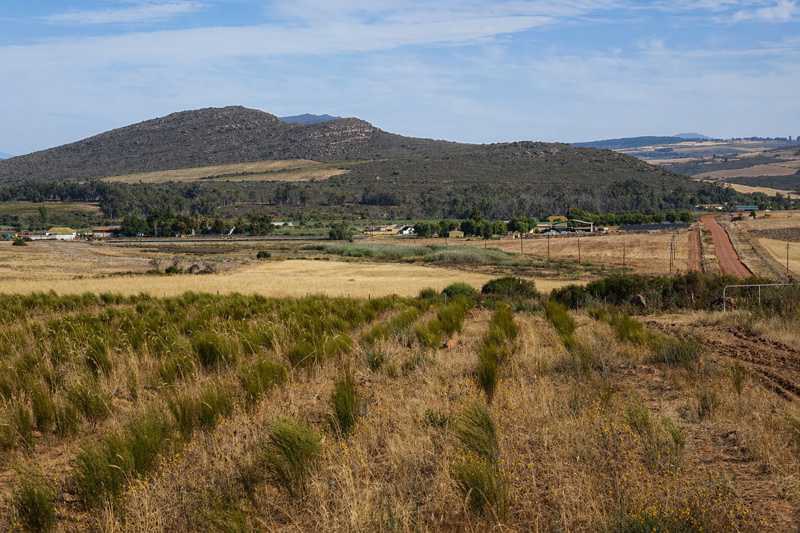
From the field, rooibos becomes visible as a real working and origin world: landscape, farmhouse, cutting area and tea court belong together here.
This wider view is important for this page. It is not meant to explain rooibos completely, but first to make visible why it is more than a mild red tea on the shelf. The deeper knowledge pages then take over the more factual part.
A plant bound to its place
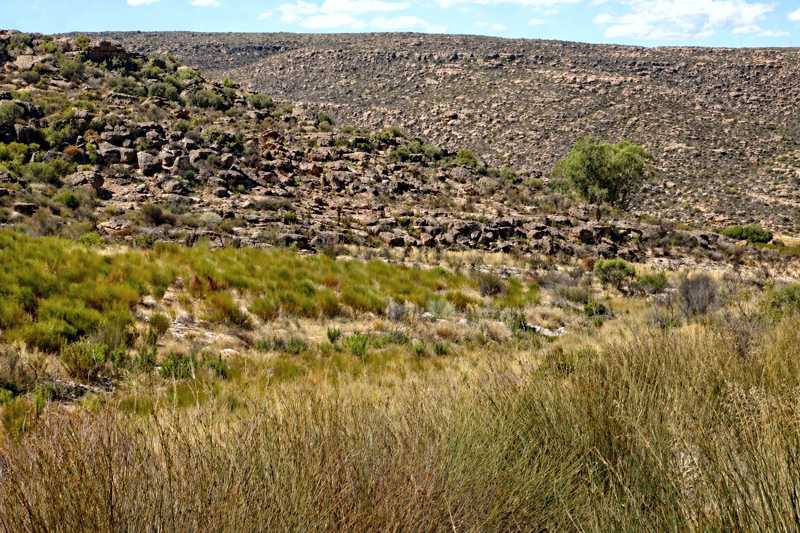
At first glance, wild-growing rooibos looks rather inconspicuous. Precisely this makes visible how closely the plant is bound to its region of origin in the Fynbos.
The most important point first: rooibos does not simply grow anywhere. It belongs to a geographically very limited natural region of the Fynbos. Hot dry summers, winter rainfall, sandy soils and recurring dry periods shape the conditions to which this plant is adapted.
This is visible in the plant itself: in its deep taproot, its narrow needle-like leaves and its close dependence on location, altitude and water availability. Anyone who would like to understand this aspect in more detail will find the more factual and fuller continuation on the knowledge page about the rooibos plant.
How wild rooibos became a cultivated plant
This, too, is part of rooibos: it was not always a self-evident cultivated plant. For a long time, rooibos was mainly wild-harvested mountain tea. What seems natural today first had to be understood step by step.
This becomes especially clear with the seed. Each flower forms only one small pod with a single tiny, hard seed. Even collecting the seeds was laborious. Added to this was the actual problem of germination. Only when people better understood how to overcome this hard seed coat did wild rooibos gradually become a plant that could be cultivated. Names such as Nortier and Ginsberg stand for those transitions that are no longer visible in the finished cup.
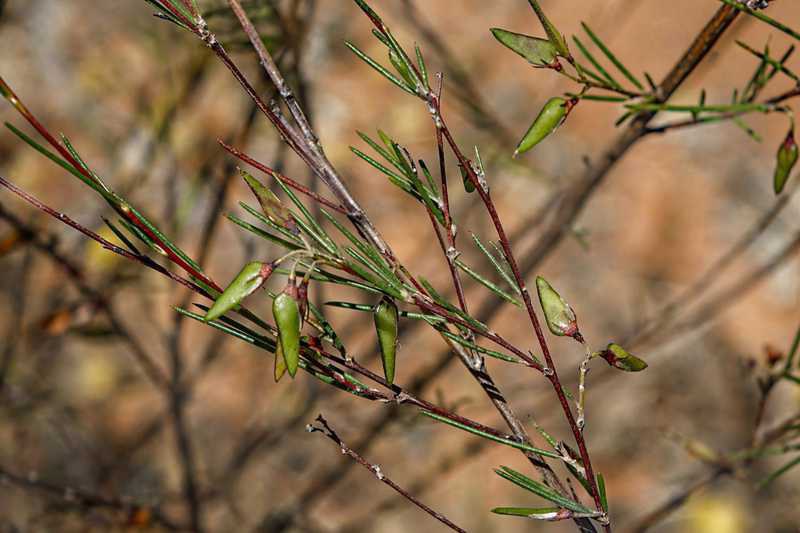
The mature fruiting bodies reveal part of what made rooibos so difficult to cultivate for so long: seed formation, collection and germination are not minor details in this plant.
Why this still reaches the cup today
Why does this matter today? Because all this is not just background history. It also explains why rooibos is more than a casual everyday drink. If a plant is so closely bound to its natural region, and if its path into cultivation, processing and marketing first had to emerge, then there is more in the cup than just a name one once saw on a shelf.
That is exactly why it is worth continuing to discover rooibos from several directions: as a plant, as a history, through people and origin, or very practically through the range. This page opens the view for that. The next pages lead further in a more focused way.
Where to go from here
This page is not meant to explain everything at once. Depending on whether you would like to explore rooibos further botanically, historically, through its origin or in a practical way, different next steps lead on from here.